Sprouting & Probiotics
Sprouting and Probiotics are essential for maintaining gut health and proper nutrition during a detox.
Probiotics are live bacteria that are good for our digestive system. They are generally thought of as good bacteria that aid in a healthy gut.
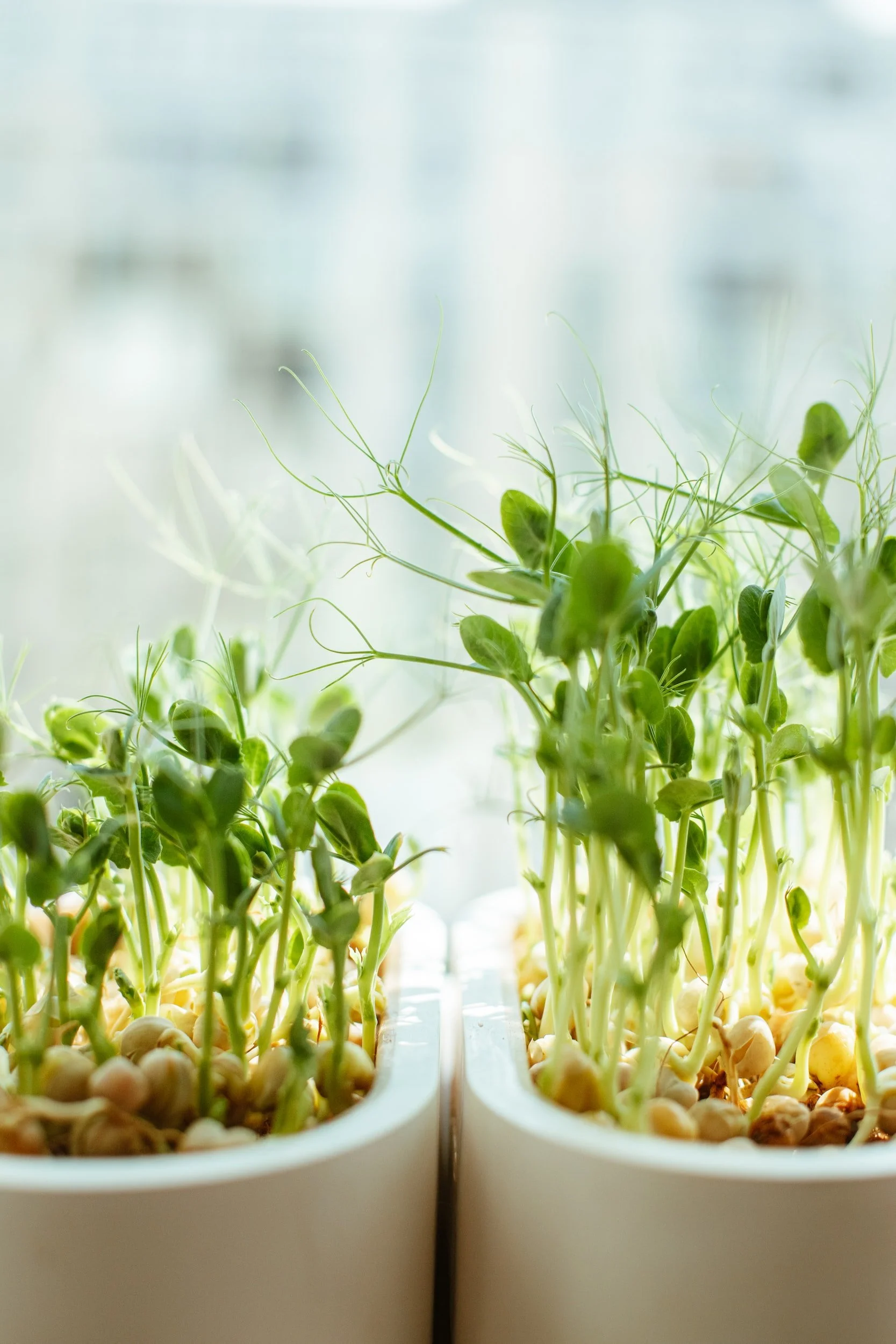
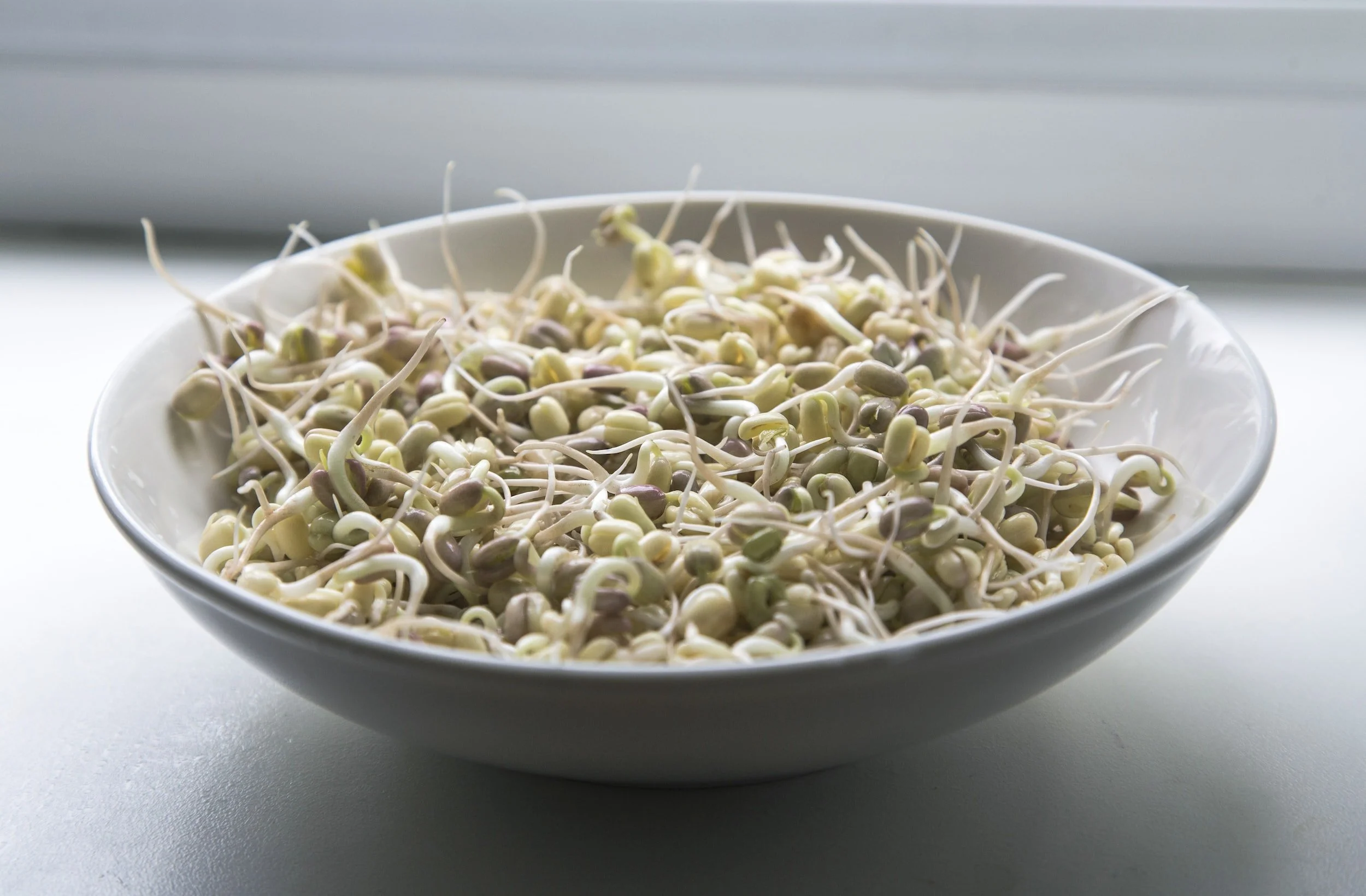
Sprouting is the process of germination of the seed of a vegetable or plant. Each seed holds an abundance of vitamins, minerals, proteins, fats, and carbohydrates which makes for a great concentrated consumption of nutrients.
SPROUTING
What are Sprouts?
The foundation of sprouts is the seed. Each seed holds vitamins, minerals, proteins, fats, and carbohydrates in reserve, awaiting the suitable environment to begin growing. When we provide air, water and the appropriate temperature, a miracle begins. The seed germinates, it begins to sprout and an incredible flow of energy is released.
Natural chemical changes occur, such as:
Enzymes are activated, which are necessary for food digestion.
Proteins convert to free amino acids – the building blocks of our bodies.
Starches change to simple sugars.
Minerals combine to increase assimilation.
Vitamin content increases from three to 12 or more times
.Chlorophyll and carotene content increase dramatically when exposed to sunlight.
To learn how to sprout, click here.
*Text from Culinary Nutrition
PROBIOTICS AND FERMENTED FOODS
What are Probiotics?
Probiotics are live bacteria that are good for our digestive system. They are generally thought of as good bacteria that aid in a healthy gut.
The techniques of fermentation are believed to have originated in Africa, the birthplace humankind. Our ancestors and folks today throughout continental Africa understood the importance of good gut health. Besides being essential for food preservation, they understood the benefits of fermentation that contributes to the growth of beneficial bacteria known as Probiotics.
Today throughout Africa, cereal and grains like sorghum, millet and maize are fermented into drinkable probiotics. Bean and cassava are also fermented.
During the Detox there is going to be a battle between good and evil (bad bacteria), especially as you may have ‘bacteria die off’ symptoms. Therefore we highly recommend supplementing your diet with a form of probiotic on a daily basis. You can do this by consuming fermented foods such as Sauerkraut or Kimchi or by drinking a probiotic drink such as Kefir (No Kombucha), Ginger Bug and Rejuvelac.
Both Rejuvelac and Ginger both are vegan fermented liquids. Rejuvelac is made from sprouted grains and Ginger Bug is of course made from Ginger. Rejuvelac is also critical in preparing seed cheeses as well as nut cheeses. If you choose to make either drink then it is highly recommended you start the process sooner than later, as it will take anywhere from 3-7 days.
More about how to prepare Rejuvelac here.
HOW TO PREPARE PROBIOTICS (FERMENTED FOODS)
Whole Grain Drinks
You can use millet, quinoa, brown rice, wild rice, buckwheat, Rye or sorghum.
How to Prepare
Properly clean glass spouting jar. You can soak in boiling water to kill any germs.
Cover about a cup of grain with distilled or filtered water. Allow it to soak over night.
The following morning rinse with filtered water. Keep your jar tilted to allow excess water to drain.
Leave out for 24 hours to begin spouting process. Rinse the sprouting grains a couple times during the 24 hour period.
Watch for spouting to occur. If no sprouting has occurred leave for another 12 hours.
After the time period or the following day, blend sprouted grains with 2-3 cups of distilled or filter water for about a minute and place back into jar.
Cover with cheese cloth or sprouting screen to prevent organism from entering. Keep in warm dark place at about 70-80 degrees F.
Every 24 hours stir and make sure no mold is present. If mold is present, discard and start again.
Within 24 hour your batch should start to smell sour which is an indication that the batch is fermenting properly. Also you will notice foam at the top of the batch. Batch should be done within 2-3 days.
Strain and place in fridge. Drink within 2-3 days.
*Make enough batches to last you throughout the detox and to make seed cheese if you so desire.
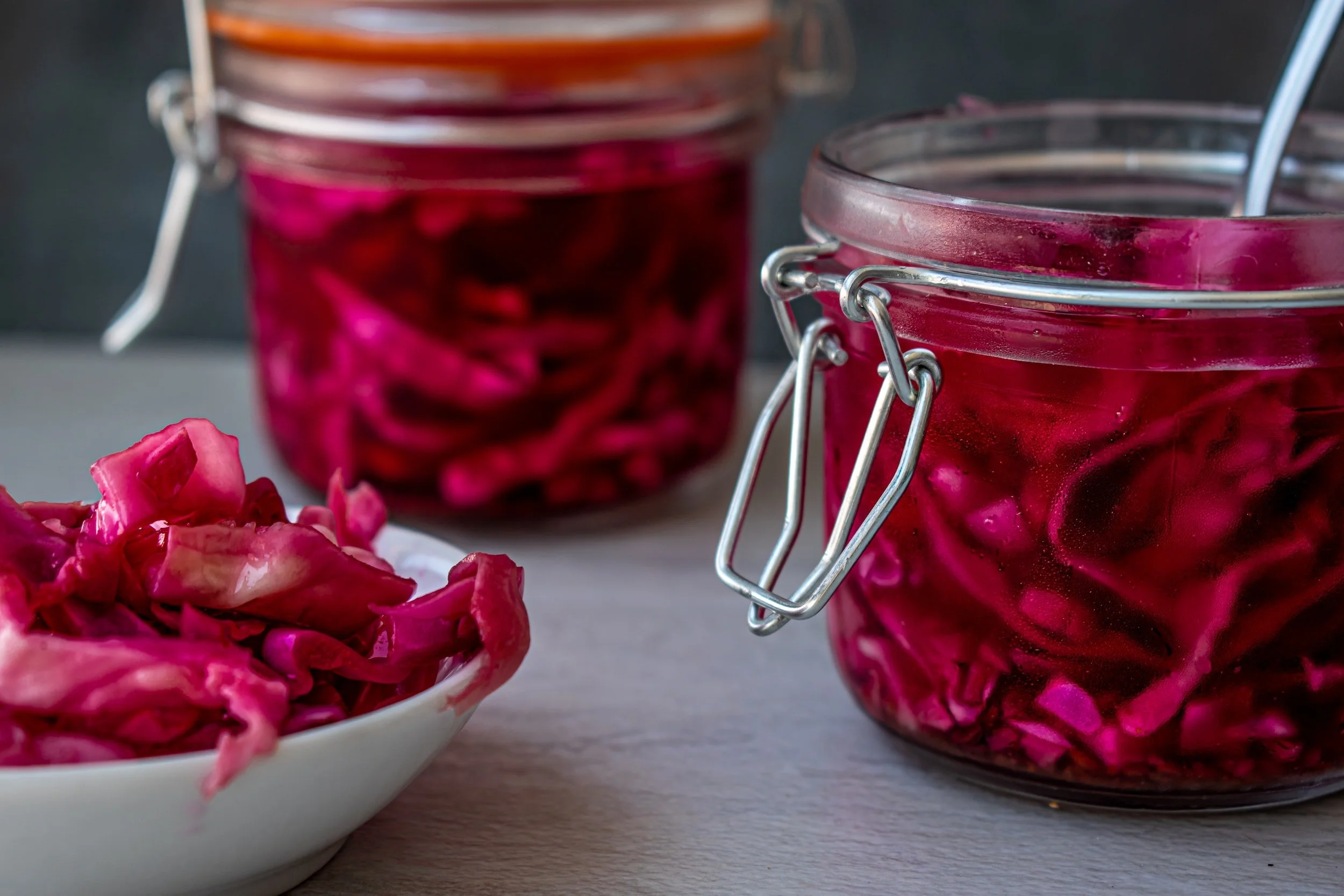
Sauerkraut
Sauerkraut is essentially fermented cabbage. ... During the fermentation process, beneficial probiotics, or 'live bacteria', are produced, and these probiotics are what
give sauerkraut most of its health benefits. Sauerkraut is a good form of dietary fibre and contains vitamins C and K, potassium, calcium and phosphorus.
GINGER BUG DRINK
INGREDIENTS
1 large piece of fresh ginger (enough to add 1 tbsp a day for 5 days) 2-3 tbsp sugar*
2 tbsp fresh lemon juice
2 cups Filtered or Spring water (chlorine free)
Sprouting Jar, Cheese Cloth & Rubber band
INSTRUCTIONS
Properly clean glass jar. You can soak in boiling water to kill any germs.
Finely dice (or grate) 1-2 tbsp of ginger. Don’t peel the ginger because the skin helps with fermentation. Mix all of the water with sugar, lemon and grated ginger in a glass quart jar.
Stir until the sugar is dissolved.
Cover with a cloth (or coffee filter) and secure in place with a rubber band or jar ring.
Place the jar somewhere warm and dark to ferment (70-80 degrees F).
Every day add 1 tablespoon of diced ginger and 1 tablespoon of sugar and stir. After 2-3 days it should start to bubble.
Once it is really bubbly (about 5-7 days) it’s ready. You may want to leave it an extra day without adding any sugar just so sugar is eaten by the probiotic. At this point place in the fridge.
Note:
The ginger bug needs to feed on sucrose, so avoid using alternative sweeteners. Coconut sugar is fine, but honey and maple syrup are not. Darker sugars are probably better.
Expect a bit of scum to form on the top. These will be strands of yeast which are eating the sugar and ginger. Watch out for mold or a bad smell. If so throw out and start again.
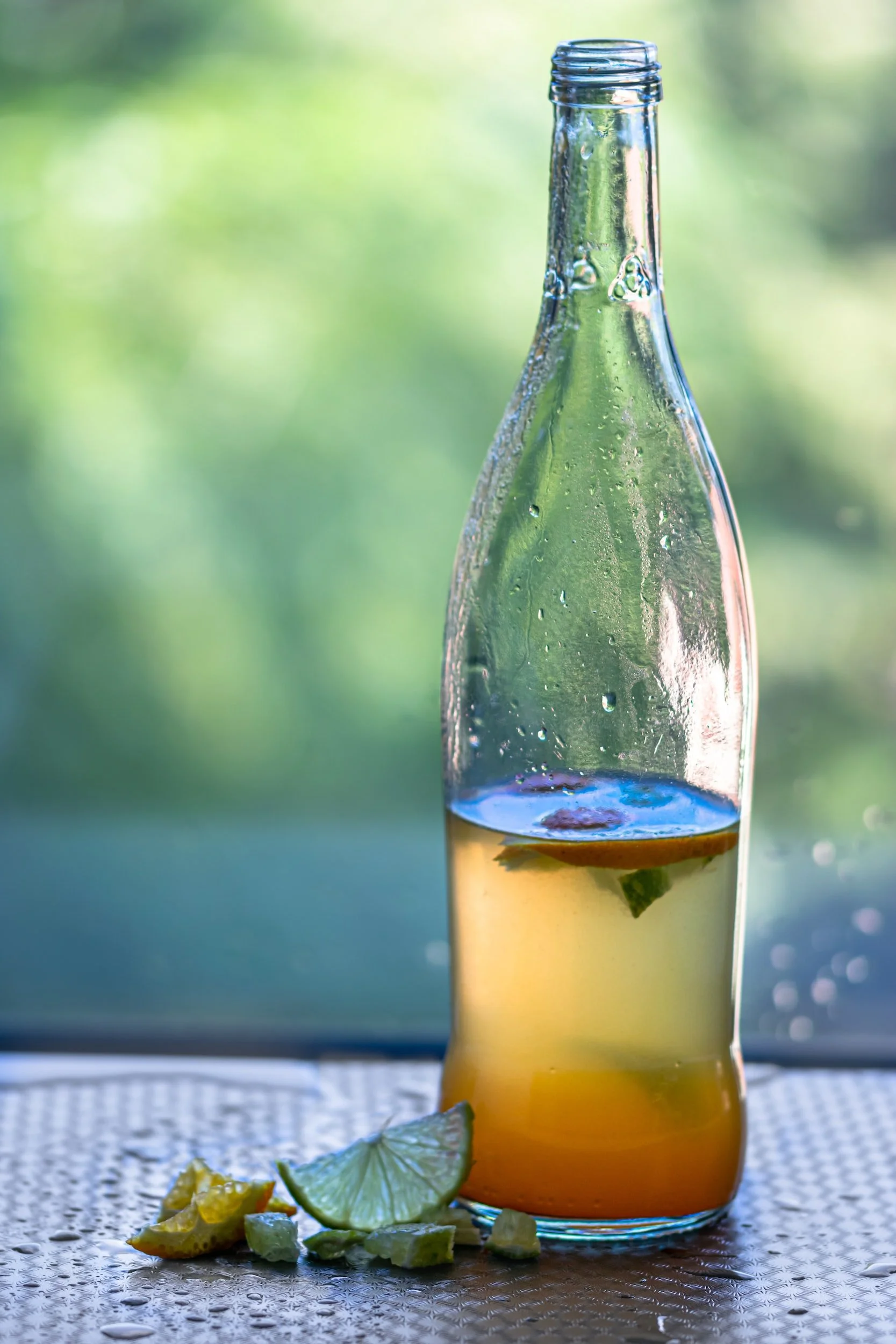
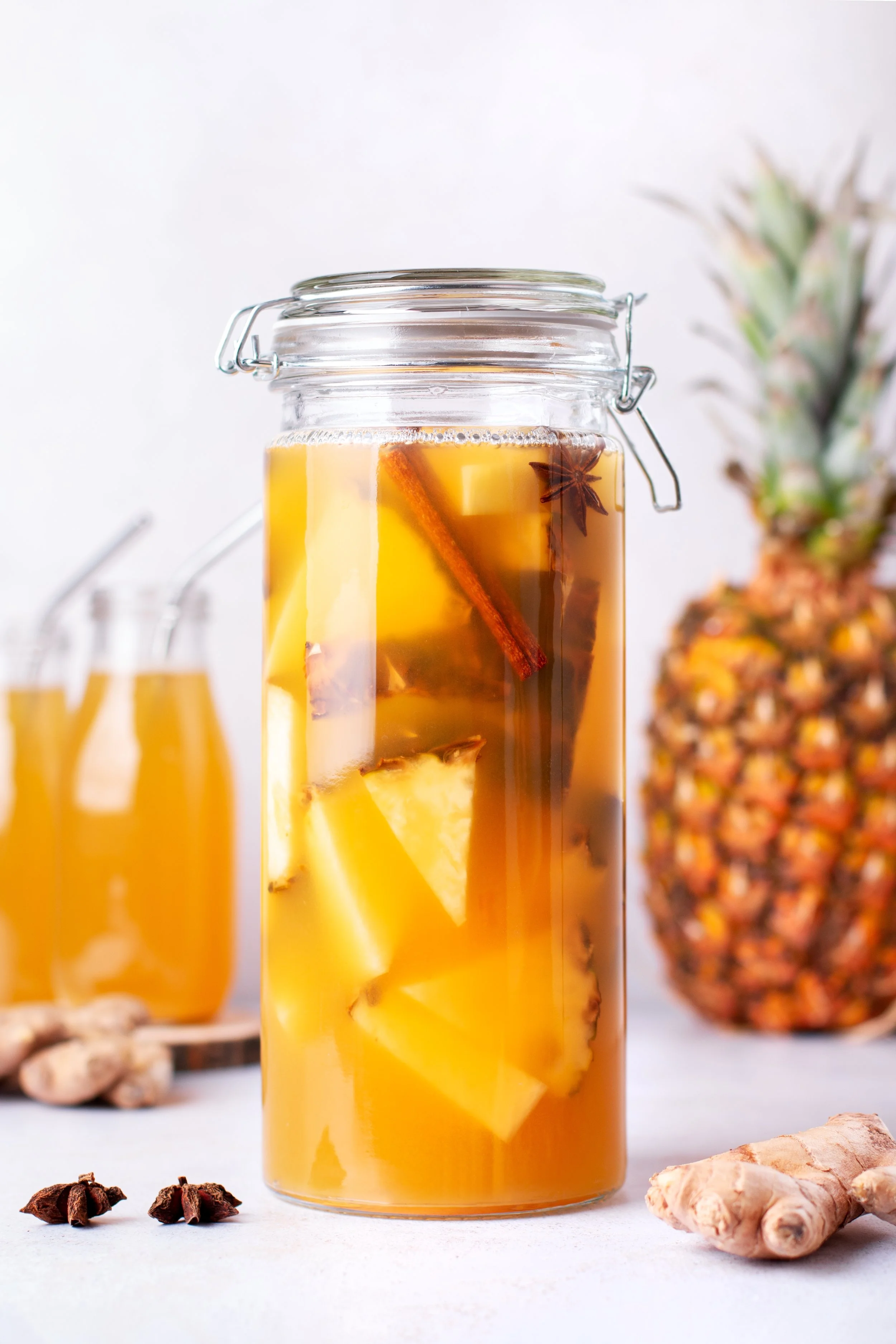
TEPACHE: PINEAPPLE PROBIOTIC DRINK
Tepache, a traditional fermented beverage from Mexico, is known for its light sweetness and simplicity, made with just three ingredients: pineapple peels, sugar, and water. Similar to kombucha, this carbonated drink is rich in probiotics. Consuming tepache, especially before breakfast, is believed to support intestinal flora due to its probiotic properties. It also boasts vitamin C, a potent antioxidant, and bromelain, an enzyme that aids in digestion and has diuretic effects.
To enhance its flavor, tepache can be infused with spices like cinnamon and cloves or with additions like ginger, lemon, or various fruits such as berries.
INGREDIENTS
·Pineapple Peel: Opt for organic pineapples whenever possible, as conventional ones are often treated with significant amounts of pesticides. Start by removing the crown and base of the pineapple, then rinse the remaining body with cool tap water. If you must use conventional pineapples, consider soaking them for 5 minutes in water with a bit of white vinegar added.
Note: Avoid scrubbing or using hot water, as we want to preserve the naturally occurring yeast on the skin. Cut the peel into large chunks, leaving about ½-inch of the pineapple flesh attached. You can also retain the pineapple core for added flavor.Sugar: 1 cup brown sugar, raw, or white sugar
Water: It is best to use filtered, non-chlorinated water or distilled water to ensure that chlorine does not inhibit fermentation.
Optional flavors: Use any or all of these: 2 thumbs sliced ginger (with skin), 1 cinnamon stick, 3 whole cloves, 2-3 pieces of anise, ¼ cup of hibiscus buds,
STEPS
1. Prepare the Sugar Water: Dissolve 1 cup of sugar in 8 cups of water. If you're using clumpy brown sugar, you might need to heat the water first to help it dissolve. Ensure the water cools down before proceeding to protect the yeast. Pour the sugar water solution into a large, sterile glass jar, pitcher, or ceramic crock.
2. Add Ingredients: Incorporate optional flavors and spices with the pineapple rinds. Submerge all the ingredients in the liquid to prevent molding by weighing them down with a small glass plate, cup, or fermentation weight.
3. Cover and Store: Cover the jar with cheesecloth or a clean dish towel and secure it with a rubber band. Place the jar in a dark spot, away from direct sunlight.
4. Monitor the Fermentation: After about 24 hours, check your brew and remove any white scum from the surface. Allow it to sit for another 24 to 36 hours. In a warm environment, it will ferment more quickly. If left too long, it will turn into vinegar. When you see many small bubbles on top, it's ready. Remove any remaining scum and strain the liquid. You can enjoy it immediately or proceed to a second fermentation for carbonation.
5. Optional Second Fermentation: A second fermentation is recommended for carbonation. Be mindful that this process creates pressure inside the bottles, which can lead to explosions if not monitored regularly. To prepare, remove any scum and strain the liquid through a fine mesh sieve or cheesecloth. Pour the liquid into fermentation bottles with flip-top caps. Store the bottles in a dark place and allow them to ferment for 1 to 3 days, checking every 12 to 24 hours until the desired carbonation level is reached. Once done, move the bottles to the refrigerator. The finished tepache can be stored in a sealed container in the refrigerator for at least a year. Over time, the flavors will continue to develop, becoming more yeasty like beer and less sweet.